books

The Serviceberry book coverIn Robin Wall Kimmerer’s book, The Serviceberry, she uses beautifully simple language to make some profound points and state some deep truths and observations, about: modern-day greed, hoarding, exploitation, and purely transactional interactions vs. reciprocity, giving, sharing, connection, “enoughness,” sufficiency, ecological economics, and gift economies.

Something that I have found, in my own life, is that giving and sharing make me feel really good—and I mean good as in happy and not just as in virtuous. I’ve also found that giving is somewhat addictive, in a good way. The more you do it, the more you want to do it. And giving anonymously often feels the best, even when you don’t know who the recipients of your gifts will be or how the gifts will affect their lives. It just feels satisfying and right.

Throughout the book, there is some repetition of the main themes (where Kimmerer uses different words to convey similar ideas), which I think can be helpful in allowing some of the concepts to really sink in. It’s a fairly short book; but if you don’t read the whole thing, I’ve pulled together a few excerpts that I think are among its many highlights, presenting some of Kimmerer’s best distillations of her primary points.

(Note: The page numbers listed below are from the hardcover version of the book. They might differ in the paperback version.)

“Whatever your currency of reciprocity—be it money, time, energy, political action, art, science, education, planting, community action, restoration, acts of care, large and small—all are needed in these urgent times.”  (p. 109)
[Note: Some specific examples of reciprocity and gift economies are listed at the end of this post.]

“Recognizing ‘enoughness’ [or ‘sufficiency’] is a radical act in an economy that is always urging us to consume more. Data tell the story that there are ‘enough’ food calories on the planet for all 6 billion of us to be nourished. And yet people are starving… “ (p. 12)

“Climate catastrophe and biodiversity loss are the consequences of unrestrained taking by humans.” (p.12)

“Why…have we permitted the dominance of economic systems that commoditize everything? That create scarcity instead of abundance, that promote accumulation rather than sharing? We’ve surrendered our values to an economic system that actively harms what we love.” (p. 25)

“In a gift economy, wealth is understood as having enough to share, and the practice for dealing with abundance is to give it away. In fact, status is determined not by how much one accumulates, but by how much one gives away.” (p. 32)

“Well-known examples of gift economies include the potlatches of Pacific Northwest peoples, in which gifts circulate in the group, solidifying bonds…. This ritualized redistribution of wealth was banned by colonial governments, under the influence of missionaries in the 1800s. Potlatches were seen as contrary to ‘the civilized values of accumulation’ and undermined the notions of individual property and advancement essential assimilation to the colonial agenda.” (p.35-36)

“Rebecca Solnit, in her stunning book A Paradise Built in Hell, describes how gift economies seem to arise spontaneously in times of disaster. When human survival is threatened, compassionate acts overrule market economies.” (p. 43)

“Let’s remember that the ‘System’ is led by individuals, by a relatively small number of people, who have names, with more money than God and certainly less compassion. They sit in boardrooms deciding to exploit fossil fuels for short-term gain while the world burns. They know the science, they know the consequences, but they proceed with ecocidal business as usual and do it anyway. …They’re all thieves, stealing our future…” (p. 71)

“I lament my own immersion in an economy that grinds what is beautiful and unique into dollars, converts gifts to commodities in a currency that enables us to purchase things we don’t really need while destroying what we do. The Serviceberries show us another model…one where wealth and security come from the quality of our relationships, not from the illusion of self-sufficiency.” (p. 72)

“Thriving is possible only if you have nurtured strong bonds with your community.” (p. 73)

“In ecological economics, the focus is on creating an economy that provides for a just and sustainable future in which both human life and nonhuman life can flourish.” (p. 74)

“…Natural selection favors those who can avoid competition. Oftentimes this avoidance is achieved by shifting one’s needs away from whatever is in short supply, as though evolution were suggesting, ‘If there’s not enough of what you want, then want something else.’ This specialization to avoid scarcity has led to a dazzling array of biodiversity, each species avoiding competition by being different. Diversity in ways of being is an antidote.” (p. 76-77)

“…scientific evidence is mounting that mutualism and cooperation…play a major role in evolution and enhance ecological well-being, especially in changing environments.” (p. 77)

“It is manufactured scarcity that I cannot accept. In order for capitalist market economics to function, there must be scarcity, and the system is designed to create scarcity where it does not actually exist.” (p. 79)

“It was previously unthinkable that one would pay for a drink of water; but as careless economic expansion pollutes fresh water, we now incentivize privatization of springs and aquifers. Sweet water, a free gift of the Earth, is pirated by faceless corporations who encase it in plastic containers to sell. And now many can’t afford what was previously free.” (p. 80)

“The Indigenous philosophy of the gift economy…has no tolerance for creating artificial scarcity through hoarding. In fact, the ‘monster’ in Potawatomi culture is Windigo, who suffers from the illness of taking too much and sharing too little. It is a cannibal, whose hunger is never sated, eating through the world.” (p. 81)

“An economy based on the impossibility of ever expanding growth leads us into nightmare scenarios. …It is an engine of extinction.” (p. 85)

“…the grinding system…leaves most of us bereft of what we really want: a sense of belonging and relationship and purpose and beauty, which can never be commoditized.” (p. 90)

“An investment in community always comes back to you in some way.” (p. 88)

“…the infinitely renewable resource of kindness…multiplies every time it is shared rather than depreciating with use.” (p. 91)

 “This transition from exploitation to reciprocity, from the individual good to the common good has been seen as a parallel to the transition that colonizing human societies must undergo, from hoarding to circulation, from independent to interdependent…if we are to thrive into the future.” (p. 100)

“The…economy of extractive capitalism, of abusing the gifts of Mother Earth, is a crime against Nature. I believe that theft is punishable by law, and we need to elect leaders who believe in the rule of law.” (p. 102)

“I’ve begun to think that berry-picking is the medicine we need to create a legion of land protectors.” (p. 104)

Kimmerer provides some specific examples of gift economies in action:

  • “…I routinely ask students if and how they participate in gifting networks. I learn about active circles of freecycling, repair cafes, donated mugs in the coffee shop replacing disposables, clothing swaps, the Buy Nothing movement, and campus free stores, where dorm room necessities are passed among generations of students…” (p. 45)
  • “They quickly cite access to open-source software and the existence of Wikipedia…where knowledge is freely shared on digital platforms in an information commons.” (p. 46)
  • “…I take a field trip to go foraging for videos on gift economies and find them everywhere. I learn about mutual-aid societies, alternative local currencies, money-free work exchanges, cooperative farms, peer-to-peer lending…” (p. 47)

Elsewhere in the book, she also mentions shared garden produce, front-yard giveaway piles, free food pantries, Little Free Libraries, public libraries, lending libraries, local Master Gardener programs and offerings, and as shown in an excerpt above, indigenous peoples’ potlatches.

A few other examples that sprung to my mind when I was reading this book include: repair cafes, as well as “time banks” or “skill share” programs and other forms of bartering.

I hope this inspires you to think about these and other examples of gift economies in action and forms of reciprocity that you see around you or that you could create around you. We should all encourage and support these types of efforts in our own neighborhoods and communities.


Related posts:

Share

January 29, 2026
[Click here to comment]

BOOKS

Recently published books that you might want to check out, read, and/or share with others:

The Arrogant Ape: The Myth of Human Exceptionalism and Why It Matters, by Christine Webb

How Can I Help? Saving Nature with Your Yard, by Douglas Tallamy
(also see his previous books and Homegrown National Park)

Here Comes the Sun: A Last Chance for the Climate and a Fresh Chance for Civilization, by Bill McKibben

Holy Ground: On Activism, Environmental Justice, and Finding Hope, by Catherine Coleman Flowers

Burned by Billionaires: How Concentrated Wealth and Power Are Ruining Our Lives and Planet, by Chuck Collins

Clamor: How Noise Took Over the World and How We Can Take It Back, by Chris Berdik

Read This When Things Fall Apart: Letters to Activists in Crisis, edited by Kelly Hayes

Murder the Truth: Fear, the First Amendment, and a Secret Campaign to Protect the Powerful, by David Enrich

Autocracy, Inc: The Dictators Who Want to Run the World, by Anne Applebaum — now available in paperback

Misguided: Where Misinformation Starts, How It Spreads, and What to Do About It, by Matthew Facciani

The Right of the People: Democracy and the Case for a New American Founding, by Osita Nwanevu

There is No Place for Us: Working and Homeless in America, by Brian Goldstone

Man Up: The New Misogyny and the Rise of Violent Extremism, by Cynthia Miller-Idriss

Separation of Church and Hate: A Sane Person’s Guide to Taking Back the Bible from Fundamentalists, Fascists, and Flock-Fleecing Frauds, by John Fugelsang

Enshittification: Why Everything Suddenly Got Worse and What To Do About It, by Cory Doctorow

Please buy books from your local independent bookstore, or from Bookshop.org, or Barnes and Noble (and not from Amazon)—for the authors, local bookstores (and local economies), the environment, and democracy.


FILMS

Documentary films that you might want to watch or mention to others:


I will add more books and films to this list as the year goes on and I learn about others that seem important and compelling.

Do you have favorite books or authors or films to recommend? Please mention them in the Comments.

Related posts:

Share

July 30, 2025
[Click here to comment]

BOOKS

Recently published books that you might want to check out, read, and/or share with others:

Saving Ourselves: From Climate Shocks to Climate Action, by Dana R. Fisher

What If We Get It Right? Visions of Climate Futures, by Ayana Elizabeth Johnson

Climate Action for Busy People, by Cate Mingoya-LaFortune

Invisible Ink: Writing from the Edge of Extinction, by Leo Joubert

The Language of Climate Politics: Fossil-Fuel Propaganda and How to Fight It, by Genevieve Guenther

The Solutionary Way: Tranform Your Life, Your Community, and the World for the Better, by Zoe Weil

Multisolving: Creating Systems Change in a Fractured World, by Elizabeth Sawin

The Serviceberry: Abundance and Reciprocity in the Natural World, by Robin Wall Kimmerer

The Weight of Nature: How a Changing Climate Changes Our Brains, by Clayton Page Aldern

Terrible Beauty: Reckoning with Climate Complicity and Rediscovering Our Soul, by Auden Schendler

Life as We Know It (Can Be): Stories of People, Climate, and Hope in a Changing World, by Bill Weir

The Gift of a Broken Heart: How Our Grief Can Connect Us, by Bryan Welch

Troubled Waters (fiction), by Mary Annaise Heglar

—————
Autocracy, Inc.: The Dictators Who Want to Run the World
, by Anne Applebaum

On Freedom, by Timothy Snyder  (He also wrote On Tyranny.)

Kingdom of Rage: The Rise of Christian Extremism and the Path Back to Peace, by Elizabeth Neumann

Wild Faith: How the Christian Right Is Taking Over America, by Talia Lavin

The Conspiracy to End America: Five Ways My Old Party is Driving Our Democracy to Autocracy, by Stuart Stevens

Also, to better understand our current political era from a historical perspective, you might also want to read some of Hannah Arendt’s classic books, such as The Origins of Totalitarianism, and A Report on The Banality of Evil, or other people’s books about fascism, dictatorship, Police State violence, or theocracy. And to see parallels to today presented through very prescient fiction, make sure you’ve read classics like 1984, Brave New World, The Handmaid’s Tale, Fahrenheit 451, Parable of the Sower (Butler), and Animal Farm.


FILMS

New documentary films that you might want to watch or mention to others:


I add more books and films to this list as the year goes on and I learn about others that seem important and compelling.

Do you have favorite books or authors or films to recommend? Please mention them in the Comments.

Related posts:

Share

June 18, 2024
1 comment

BOOKS

Eleven recently published books that you might want to check out, read, and/or give to others:

Not Too Late: Changing the Climate Story from Despair to Possibility, short essays by a bunch of great climate experts and authors, edited by Rebecca Solnit and Thelma Young Lutunatabua

No Miracles Needed: How Today’s Technology Can Save Our Climate and Clean Our Air, by Mark Z. Jacobson

At Home on an Unruly Planet: Finding Refuge on a Changed Earth, by Madeline Ostrander

Our Fragile Moment: How Lessons from Earth’s Past Can Help Us Survive the Climate Crisis, by Michael Mann

The Heat Will Kill You First: Life and Death on a Scorched Planet, by Jeff Goodell

The Regenerative Materials Movement: Dispatches from Practitioners, Researchers, and Advocates, edited by the International Living Future Institute

Soil: The Story of a Black Mother’s Garden, by Camille T. Dungy

Alfie and Me: What Owls Know, What Humans Believe, by Carl Safina

Democracy Awakening: Notes on the State of America, by Heather Cox Richardson

Saving Democracy: A User’s Manual for Every American, by David Pepper

Fiction:  The Lost Cause, by Cory Doctorow

Also check out the books published by New Society Publishers and Chelsea Green Publishing and Island Press, for a wide selection of titles on sustainability topics.


FILMS

Four new documentary films that you might want to watch and/or mention to others (note: some of these might not be widely distributed via theaters or streaming until 2024):

The Last of the Nightingales  (32 min.; featuring Bernie and Katherine Krause; view trailer here)

Radioactive: The Women of Three Mile Island

King Coal

The Need to Grow: Save the Soil, Save the World


I continue to add books and films to this list as the year goes on and I learn about new ones. Do you have favorite books or authors or films to recommend? Please mention them in the Comments.


Related posts:

Share

August 24, 2023
3 comments

These are a few recently published books that you may want to consider reading and/or giving to others as a gift:

The Climate Book: The Facts and the Solutions, by Greta Thunberg

Under a White Sky: The Nature of the Future, by Elizabeth Kolbert (also the author of The Sixth Extinction)

An Immense World: How Animal Senses Reveal the Hidden Realms Around Us, by Ed Yong (also the author of I Contain Multitudes)

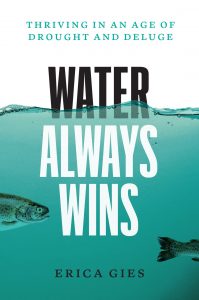
Water Always Wins: Thriving in an Age of Drought and Deluge, by Erica Gies

Call Us What We Carry (poems), by Amanda Gorman

The Flag, The Cross, and the Station Wagon: A Graying American Looks Back at His Suburban Boyhood and Wonders What the Hell Happened, by Bill McKibben

Midnight in Washington: How We Almost Lost Our Democracy and Still Could, by Adam Schiff

The Storm is Upon Us: How QAnon Became a Movement, Cult, and Conspiracy Theory of Everything, by Mike Rothschild

Beyond Belief: How Pentecostal Christianity is Taking Over the World, by Elle Hardy

Stolen Focus: Why You Can’t Pay Attention—And How to Think Deeply Again, by Johann Hari

Another book I would recommend is the following [disclosure: it was written by a family member]. It came out a few years ago, but it imparts important and timely lessons on the folly of violence (and the value of non-violent dissent) that all social movements and activists can benefit from:

Looking for Revolution, Finding Murder: The Crimes and Transformation of Katherine Ann Power, by Janet Landman


Also check out the books published by New Society Publishers and Chelsea Green Publishing and Island Press, for a wide selection of titles on green/sustainability topics.

Please buy books from independent bookstores to keep them in business (you can find the ones closest to you on IndieBound.org)—or from Powell’s Books, Barnes & Noble, or Better World Books—rather than from Amazon. There are numerous good reasons not to buy anything (but especially books) from Amazon. (And remember, when you pay the lowest possible price for books, the authors, publishers, and warehouse workers are all likely to receive a lot less for their work.) Also, when buying online, avoid choosing one- or two-day shipping unless it’s actually necessary; overnight/airplane-based rush shipping has an enormous environmental footprint as well as a serious cost to worker safety and sanity.

Consider buying gift certificates from local, independent bookstores for your family or friends.

For online audio books, check out Libro.fm, which also helps support your local independent bookstore.

Do you have some favorite books or authors to recommend? Please mention them in the Comments.

Related posts:

Share

November 20, 2022
[Click here to comment]

These are a few recently published non-fiction books that you may want to consider reading and/or giving to others as a gift:

Under the Sky We Make: How to Be Human in a Warming World, by Kimberly Nicholas, PhD

Water Always Wins: Thriving in an Age of Drought and Deluge, by Erica Gies

Saving Us: A Climate Scientist’s Case for Hope and Healing in a Divided World, by Katherine Hayhoe

The Power of Tranquility in a Very Noisy World, by Bernie Krause (author of The Great Animal Orchestra)

Finding the Mother Tree: Discovering the Wisdom of the Forest, by Suzanne Simard

100% Clean Renewable Energy and Storage for Everything, by Mark Z. Jacobson

Regeneration: Ending the Climate Crisis in One Generation, by Paul Hawken

Our Time is Now: Power, Purpose, and the Fight for a Fair America, by Stacey Abrams

Net Positive: How Courageous Companies Thrive by Giving More Than They Take, by Paul Polman and Andrew Winston

The Dawn of Everything: A New History of Humanity, by David Graeber and David Wengrow

And here are two novels (fiction with wisdom on the climate) to read:

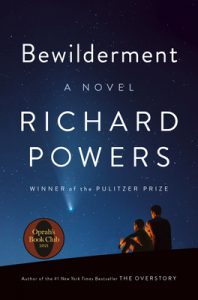
Bewilderment, by Richard Powers

The Ministry for the Future, by Kim Stanley Robinson


Also check out the books published by New Society Publishers and Chelsea Green Publishing and Island Press, for a wide selection of titles on green/sustainability topics.

Please buy books from independent bookstores to keep them in business (you can find the ones closest to you on IndieBound.org)—or from Powell’s Books, Barnes & Noble, or Better World Books—rather than from Amazon. There are numerous good reasons not to buy anything (but especially books) from Amazon. (And remember, when you pay the lowest possible price for books, the authors, publishers, and warehouse workers are all likely to receive a lot less for their work.) Also, when buying online, avoid choosing one- or two-day shipping unless it’s actually necessary; overnight/airplane-based rush shipping has an enormous environmental footprint as well as a serious cost to worker safety and sanity.

Consider buying gift certificates from local, independent bookstores for your family or friends.

For online audio books, check out Libro.fm, which also helps support your local independent bookstore.

Do you have some favorite books or authors to recommend? Please mention them in the Comments.

Related posts:

Share

November 11, 2021
[Click here to comment]

These are a few recently published books that you may want to consider reading and/or giving to someone as a gift:

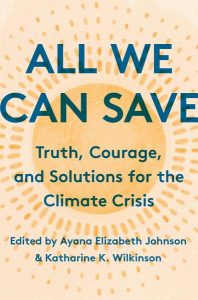
All We Can Save: Truth, Courage, and Solutions for the Climate Crisis (essays from more than 40 women who are at the forefront of the climate movement), edited by Ayana Elizabeth Johnson and Katherine K. Wilkinson

The New Climate War: The Fight to Take Back Our Planet, by Michael E. Mann

Becoming Wild: How Animal Cultures Raise Families, Create Beauty, and Achieve Peace, by Carl Safina

World of Wonders: In Praise of Fireflies, Whale Sharks, and Other Astonishments, by Aimee Nezhukumatathil

And here are a few that aren’t primarily focused on environmental topics, but they are also important books for our time:

What Unites Us, by Dan Rather and Elliot Kirschner  [also coming out as a graphic novel]

How to Fly (In Ten Thousand Easy Lessons) (poems), by Barbara Kingsolver

Caste: The Origins of Our Discontents, by Isabel Wilkerson

Wintering: The Power of Rest and Retreat in Difficult Times, by Katherine May

Also check out the books published by Chelsea Green Publishing and New Society Publishers and Island Press, for a wide selection of titles on green/sustainability topics.

Please buy books from independent bookstores to keep them in business (you can find the ones closest to you on IndieBound.org)—or Powell’s Books, Barnes & Noble, or Better World Books—rather than from Amazon. There are numerous good reasons not to buy anything (but especially books) from Amazon. (And remember, when you pay the lowest possible price for books, the authors, publishers, and warehouse workers are all likely to receive a lot less for their work.) Also, when buying online, avoid choosing one- or two-day shipping unless it’s actually necessary; overnight/airplane-based shipping has an enormous environmental footprint as well as a serious cost to worker safety and sanity.

Consider buying gift certificates from local, independent bookstores for your family or friends.

For online audio books, check out Libro.fm, which also helps support your local independent bookstore.

Do you have some favorite books or authors to recommend? Please mention them in the Comments.

Related posts:

Share

November 27, 2020
[Click here to comment]

I have noticed that animal protection and animal rights are issues that unite people of many different backgrounds and political stripes (even more so than a love of nature or a desire to protect the environment). Most people recognize that we humans are animals too, and many people understand that all living beings have inherent value and should have the right to live and thrive.
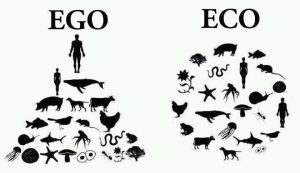
Personally, I believe that other species have as much of a right to exist, live, and thrive as humans do. I do not feel that my life has greater importance or value than the lives of other creatures. I also do not believe that other animals are here for us; they are here with us (and many species were here long before us), and they are not ours to use, abuse, commodify, cage, or exploit. Since they cannot speak for themselves or defend themselves against people (and our various types of weapons and threats), I do think it is our responsibility to try to protect them from other humans who do them harm.

Animals of all kinds—wild and domestic—face a wide variety of threats (to their survival, health, and well-being) from humans, including:

cruelty, abuse, domestic violence, neglect, exploitation and captivity (for human entertainment), factory farming, inhumane slaughter, over-hunting, poaching, trapping, trafficking, poisoning (e.g., rat poison and pesticides/herbicides; water, soil, and air pollution; plastic waste/pollution; intentional poisoning e.g. cyanide poisoning of elephants’ watering holes), widespread habitat destruction (e.g. from deforestation, development, agribusiness e.g. cattle grazing and crop plantations, mining, and road-building), medical research, animal testing (for products e.g. cosmetics), injury or death from vehicles or buildings (e.g., getting hit by cars or planes, birds flying into windows), and the overarching problem that affects all species including our own: climate change (extreme and volatile temperatures, drought; loss of food sources; extreme storms/hurricanes, flooding, fires, etc.)

Between 1970-2012 (in just over 40 years), humans have wiped out about 60% of the earth’s mammals, birds, fish, reptiles, and amphibians, according to WWF’s Living Planet report of 2018. (As the human population has increased, wildlife populations have decreased, by similar degrees. Over that same time period (1970-2012), the world population of humans almost doubled, growing by approx. 3.5 billion people to more than 7 billion people. In 2020, we’re now approaching 8 billion.) The WWF study also found that freshwater wildlife populations have decreased by 83%, and extreme deforestation in South and Central America has led to a wildlife decline of 89% in that region. During the past 12,000 years of human civilization, humans have killed almost half of the trees on earth; around 15 billion trees are cut down each year (source). When we destroy animals’ habitat, we are destroying living beings and biodiversity. This not only creates a bleaker world in which to live; we are also destroying our own cousins and our shared life support systems.


“The greatness of a nation and its moral progress can be judged by the way its animals are treated. …I hold that the more helpless a creature, the more entitled it is to protection by man from the cruelty of man.”
– Mahatma Gandhi

Below is a listing of some of the many organizations that advocate for animals. They include animal rights, welfare/protection, conservation, rescue and rehabilitation, and refuge/sanctuary groups. Some are focused primarily on wildlife (including threatened or endangered species, or biodiversity), while others are focused on domesticated / companion animals (e.g. pets) or farmed animals. And a few do work that addresses all of the above. I have mostly included groups with a national (U.S.) or international scope, but there are many local and regional community-based groups for animals (in particular rescue groups that serve a local area), as well. I encourage you to do an online search to identify and support the ones in your region. Also follow our Twitter list of animal protection groups.

Organizations are listed below under the categories: General/Broad-based; Biodiversity; Farm Animals (and Humane Eating); Wild Animal Sanctuaries; Anti-Poaching and -Trafficking; Species-Specific (elephants, wolves, marine animals, primates, donkeys); Disaster Response/Rescue; Anti- Animal-Testing/Research/Experiments; Petitions; Books, Films, Audio, Videos; and Other Resources. And at the end, you will see More Quotations and Related Posts.

Note: This listing is not comprehensive. Also, I cannot vouch for the effectiveness or integrity of every group listed here (i.e., being listed does not necessarily constitute an endorsement). I will periodically add more links to the listing as I learn about other interesting groups. Please feel free to recommend additional groups in the Comments section.

General / broad-based animal rights and welfare groups


Biodiversity groups

These groups focus on broad issues that affect wild animal populations, such as habitat conservation, wildlife and endangered species protection, biodiversity, rewilding, and climate.

Also see the Anti-poaching category below.

And see the land/habitat conservation groups listed in our post Sustainable Land Use and Land Stewardship.

Organizations that work to protect and preserve wilderness (including intact forests and other wild lands) are thereby also preserving habitat for wildlife.


Farm animal groups and rescues/sanctuaries

There are many animal rescues and sanctuaries all over the country and the world. The following list is just a small selection of them that provide safe places for farm(ed) animals. Do a search to find the ones in your area, and see if you can go on a tour, or donate / sponsor (“adopt”) an animal:

Humane eating/meat standards:

Some would (maybe rightly) argue that there is no such thing as “humanely” raising or slaughtering (or hunting) animals for meat. I have included vegetarian/vegan resources here, as well as information about the various “humane” standards and certifications for meat producers. While I believe the choice to be vegan or vegetarian is admirable and ideal, the reality is that most humans have been and continue to be carnivores (omnivores), and I don’t think that people can be shamed out of meat-eating. Non-dogmatically-presented information and education can help, and more people are moving towards a low-meat, more humanely-raised-meat, or no-meat (or dairy) diet, but those are choices that each person comes to based on their own personal convictions and experiences.


Wild/large animal sanctuaries 

 There are many others. To find others, check out this listing of accredited sanctuaries.

Also see the sanctuaries for specific species, e.g., elephants, wolves, donkeys, etc., listed under “Species-specific groups,” below.


Anti-poaching, -trafficking, -wildlife-crime groups


Species-specific groups

The following is a small selection of the many groups that focus on particular species:

Elephants:

(Also see the Anti-Poaching groups listed above, which help protect elephants as well as other animals. And see the films Love and Bananas, and Last Days of Ivory.)

Wolves:

Marine animals:

Find other marine animal rescue groups here (a listing). And see the films The Cove and Blackfish.

Primates:

Donkeys:

Big cats:


Disaster response/rescue groups

Do an online search to find out if there’s some type of Animal Disaster Response group, such as an Animal Response Team (e.g., “State Animal Response Team” (SART) or “Community/County Animal Response Team” (CART)) established in your state, county, or city/town. If there isn’t one, consider organizing people to start one in your area, to help rescue pets, horses, livestock, and other animals during disasters.


Anti- animal testing/research/experiments groups


Petitions

Many of the organizations listed in the first section and in other sections of this post create their own petitions or letters that you can sign on to. Sign up for some organizations’ mailing lists, and check their websites’ Action-related sections.

Also see these websites:

And you can also check these other petition sites, which sometimes have animal-related petitions.


Books, Films, Audio, Videos, Podcast

Books:

Films:

Audio (natural/animal sounds):

Videos / social media:

Other Resources

Find wildlife rescue/rehabilitation centers in your state or county (and here’s another directory) — places that help treat orphaned, sick, or injured wildlife

Wildlifeel at Home: A conservation-based home design/build studio

Find domestic animal rescues/shelters for pet adoption near you

Dog Food Advisor  (including pet food Recall alerts)
Dog Food Analysis

House Rabbit Society

Also see/follow our Twitter list of animal protection groups.


More Quotations

“We can judge the heart of a man by his treatment of animals.”
— Immanuel Kant

“What is man without the beasts? If all the beasts were gone, men would die from the great loneliness of spirit. For whatever happens to the beasts, soon happens to man. All things are connected.”
– widely attributed to Chief Seattle (but it actually seems to have been written or adapted by the screenwriter for the 1972 film Home)

“Our task must be to widen our circle of compassion to embrace all living creatures and the whole of nature in its beauty.”
— Albert Einstein

“We are forever responsible for that which we have tamed.”
– Antoine de Saint-Exupery


Related posts:

Share

July 8, 2020
1 comment

These are some recently published books that you may want to consider reading and/or giving to someone as a gift:

The Overstory, by Richard Powers  
(This is a novel, and it won the 2019 Pulitzer Prize.)

Erosion: Essays of Undoing, by Terry Tempest Williams

Falter: Has the Human Game Begun to Play Itself Out?, by Bill McKibben

Drawdown: The Most Comprehensive Plan Ever Proposed to Reverse Global Warming, edited by Paul Hawken

Being the Change: Live Well and Spark a Climate Revolution, by Peter Kalmus

Deep Creek: Finding Hope in the High Country, by Pam Houston

The World-Ending Fire: The Essential Wendell Berry

Renewal: How Nature Awakens Our Creativity, Compassion, and Joy, by Andres Edwards

Confessions of a Rogue Nuclear Regulator, by Gregory Jaczko

Call Them by Their True Names: American Crises (and Essays), by Rebecca Solnit

Feral: Rewilding the Land, the Sea, and Human Life, by George Monbiot

Out of the Wreckage: A New Politics for an Age of Crisis, by George Monbiot

Our Wild Calling: How connecting with animals can transform our lives—and save theirs, by Richard Louv

Beyond Words: What Animals Think and Feel, by Carl Safina

I’d also recommend taking a look at other books written by the authors listed above, as well as books by Rachel Carson, Elizabeth Kolbert, John McPhee, Annie Dillard, Bernie Krause, Joanna Macy, and Barbara Kingsolver.

And check out the books published by Chelsea Green Publishing and New Society Publishers and Island Press, for a wide selection of titles on green/sustainability topics.

Another book I would recommend is the following [disclosure: it was written by a family member]. Though it is not directly related to environmental issues, it does impart important lessons on non-violent dissent (and the folly of violence) that all activists and social movements (including environmental activists and movements) can benefit from:

Looking for Revolution, Finding Murder: The Crimes and Transformation of Katherine Ann Power, by Janet Landman (2019)


Note: Please try to buy books from independent bookstores (or Barnes & Noble), rather than from Amazon. There are probably over a dozen compelling reasons not to buy anything (but especially books) from Amazon. Also avoid choosing one- or two-day shipping unless it’s really necessary; overnight/airplane-based shipping has an enormous environmental footprint as well as a serious cost to worker safety.

Do you have favorite books or authors to recommend? Please mention them in the Comments.

Related Posts:

Share

November 25, 2019
2 comments