quotations

The Serviceberry book coverIn Robin Wall Kimmerer’s book, The Serviceberry, she uses beautifully simple language to make some profound points and state some deep truths and observations, about: modern-day greed, hoarding, exploitation, and purely transactional interactions vs. reciprocity, giving, sharing, connection, “enoughness,” sufficiency, ecological economics, and gift economies.

Something that I have found, in my own life, is that giving and sharing make me feel really good—and I mean good as in happy and not just as in virtuous. I’ve also found that giving is somewhat addictive, in a good way. The more you do it, the more you want to do it. And giving anonymously often feels the best, even when you don’t know who the recipients of your gifts will be or how the gifts will affect their lives. It just feels satisfying and right.

Throughout the book, there is some repetition of the main themes (where Kimmerer uses different words to convey similar ideas), which I think can be helpful in allowing some of the concepts to really sink in. It’s a fairly short book; but if you don’t read the whole thing, I’ve pulled together a few excerpts that I think are among its many highlights, presenting some of Kimmerer’s best distillations of her primary points.

(Note: The page numbers listed below are from the hardcover version of the book. They might differ in the paperback version.)

“Whatever your currency of reciprocity—be it money, time, energy, political action, art, science, education, planting, community action, restoration, acts of care, large and small—all are needed in these urgent times.”  (p. 109)
[Note: Some specific examples of reciprocity and gift economies are listed at the end of this post.]

“Recognizing ‘enoughness’ [or ‘sufficiency’] is a radical act in an economy that is always urging us to consume more. Data tell the story that there are ‘enough’ food calories on the planet for all 6 billion of us to be nourished. And yet people are starving… “ (p. 12)

“Climate catastrophe and biodiversity loss are the consequences of unrestrained taking by humans.” (p.12)

“Why…have we permitted the dominance of economic systems that commoditize everything? That create scarcity instead of abundance, that promote accumulation rather than sharing? We’ve surrendered our values to an economic system that actively harms what we love.” (p. 25)

“In a gift economy, wealth is understood as having enough to share, and the practice for dealing with abundance is to give it away. In fact, status is determined not by how much one accumulates, but by how much one gives away.” (p. 32)

“Well-known examples of gift economies include the potlatches of Pacific Northwest peoples, in which gifts circulate in the group, solidifying bonds…. This ritualized redistribution of wealth was banned by colonial governments, under the influence of missionaries in the 1800s. Potlatches were seen as contrary to ‘the civilized values of accumulation’ and undermined the notions of individual property and advancement essential assimilation to the colonial agenda.” (p.35-36)

“Rebecca Solnit, in her stunning book A Paradise Built in Hell, describes how gift economies seem to arise spontaneously in times of disaster. When human survival is threatened, compassionate acts overrule market economies.” (p. 43)

“Let’s remember that the ‘System’ is led by individuals, by a relatively small number of people, who have names, with more money than God and certainly less compassion. They sit in boardrooms deciding to exploit fossil fuels for short-term gain while the world burns. They know the science, they know the consequences, but they proceed with ecocidal business as usual and do it anyway. …They’re all thieves, stealing our future…” (p. 71)

“I lament my own immersion in an economy that grinds what is beautiful and unique into dollars, converts gifts to commodities in a currency that enables us to purchase things we don’t really need while destroying what we do. The Serviceberries show us another model…one where wealth and security come from the quality of our relationships, not from the illusion of self-sufficiency.” (p. 72)

“Thriving is possible only if you have nurtured strong bonds with your community.” (p. 73)

“In ecological economics, the focus is on creating an economy that provides for a just and sustainable future in which both human life and nonhuman life can flourish.” (p. 74)

“…Natural selection favors those who can avoid competition. Oftentimes this avoidance is achieved by shifting one’s needs away from whatever is in short supply, as though evolution were suggesting, ‘If there’s not enough of what you want, then want something else.’ This specialization to avoid scarcity has led to a dazzling array of biodiversity, each species avoiding competition by being different. Diversity in ways of being is an antidote.” (p. 76-77)

“…scientific evidence is mounting that mutualism and cooperation…play a major role in evolution and enhance ecological well-being, especially in changing environments.” (p. 77)

“It is manufactured scarcity that I cannot accept. In order for capitalist market economics to function, there must be scarcity, and the system is designed to create scarcity where it does not actually exist.” (p. 79)

“It was previously unthinkable that one would pay for a drink of water; but as careless economic expansion pollutes fresh water, we now incentivize privatization of springs and aquifers. Sweet water, a free gift of the Earth, is pirated by faceless corporations who encase it in plastic containers to sell. And now many can’t afford what was previously free.” (p. 80)

“The Indigenous philosophy of the gift economy…has no tolerance for creating artificial scarcity through hoarding. In fact, the ‘monster’ in Potawatomi culture is Windigo, who suffers from the illness of taking too much and sharing too little. It is a cannibal, whose hunger is never sated, eating through the world.” (p. 81)

“An economy based on the impossibility of ever expanding growth leads us into nightmare scenarios. …It is an engine of extinction.” (p. 85)

“…the grinding system…leaves most of us bereft of what we really want: a sense of belonging and relationship and purpose and beauty, which can never be commoditized.” (p. 90)

“An investment in community always comes back to you in some way.” (p. 88)

“…the infinitely renewable resource of kindness…multiplies every time it is shared rather than depreciating with use.” (p. 91)

 “This transition from exploitation to reciprocity, from the individual good to the common good has been seen as a parallel to the transition that colonizing human societies must undergo, from hoarding to circulation, from independent to interdependent…if we are to thrive into the future.” (p. 100)

“The…economy of extractive capitalism, of abusing the gifts of Mother Earth, is a crime against Nature. I believe that theft is punishable by law, and we need to elect leaders who believe in the rule of law.” (p. 102)

“I’ve begun to think that berry-picking is the medicine we need to create a legion of land protectors.” (p. 104)

Kimmerer provides some specific examples of gift economies in action:

  • “…I routinely ask students if and how they participate in gifting networks. I learn about active circles of freecycling, repair cafes, donated mugs in the coffee shop replacing disposables, clothing swaps, the Buy Nothing movement, and campus free stores, where dorm room necessities are passed among generations of students…” (p. 45)
  • “They quickly cite access to open-source software and the existence of Wikipedia…where knowledge is freely shared on digital platforms in an information commons.” (p. 46)
  • “…I take a field trip to go foraging for videos on gift economies and find them everywhere. I learn about mutual-aid societies, alternative local currencies, money-free work exchanges, cooperative farms, peer-to-peer lending…” (p. 47)

Elsewhere in the book, she also mentions shared garden produce, front-yard giveaway piles, free food pantries, Little Free Libraries, public libraries, lending libraries, local Master Gardener programs and offerings, and as shown in an excerpt above, indigenous peoples’ potlatches.

A few other examples that sprung to my mind when I was reading this book include: repair cafes, as well as “time banks” or “skill share” programs and other forms of bartering.

I hope this inspires you to think about these and other examples of gift economies in action and forms of reciprocity that you see around you or that you could create around you. We should all encourage and support these types of efforts in our own neighborhoods and communities.


Related posts:

Share

January 29, 2026
[Click here to comment]

It’s been a while since I’ve posted a selection of quotations, and this seems like a good time to do so. Many of these quotations offer wisdom on extractive or polluting industries and activities, and on cultivating an environmental ethic:

“There are no unsacred places;
there are only sacred places
and desecrated places.”
— Wendell Berry, “How to Be a Poet”

“Someone needs to explain to me why wanting clean drinking water makes you an activist, and why proposing to destroy water with chemical warfare doesn’t make a corporation a terrorist.”
— Winona LaDuke

“We can continue pushing our earth out of balance, with greenhouse gases accelerating each year, or we can regain balance by acknowledging that if we harm one species, one forest, one lake, this ripples through the entire complex web. Mistreatment of one species is mistreatment of all. …Making this transformation requires that humans reconnect with nature…instead of treating everything and everyone as objects for exploitation.”
Suzanne Simard, Finding the Mother Tree: Discovering the Wisdom of the Forest

“We abuse land because we see it as a commodity belonging to us. When we see land as a community to which we belong, we may begin to use it with love and respect.”
— Aldo Leopold

“Conservation will ultimately boil down to rewarding the private landowner who conserves the public interest…. Incentives are more promising than penalties.”
— Aldo Leopold

“It is difficult to get a man to understand something when his salary depends on his not understanding it.”
— Upton Sinclair

“Do the best you can until you know better. Then when you know better, do better.”
– Maya Angelou

“It is possible to both be proud of your life and want better for your children.”
— from the new film, King Coal

“…[Human]kind is challenged, as it has never been challenged before, to prove its maturity and its mastery — not of nature, but of itself.”
— Rachel Carson

“Man is a part of nature, and his war against nature is inevitably a war against himself.”
— Rachel Carson

“An organism that is too greedy and takes too much without giving anything in return destroys what it needs for life.”
— Peter Wohlebben, The Hidden Life of Trees

“The trees act not as individuals, but somehow as a collective. …What we see is the power of unity. What happens to one happens to us all. We can starve together or feast together.”
Robin Wall Kimmerer, Braiding Sweetgrass: Indigenous Wisdom, Scientific Knowledge and the Teachings of Plants


Note: I also recently added quotations to an earlier post, Re-Tree the World.

You can find our other Quotations posts indexed here, and a long set of Quotations here.

Share

March 24, 2023
[Click here to comment]

Here are graphics of a few pieces of wisdom from Jane Goodall, Edward Everett Hale, Maya Angelou, Barbara Kingsolver, Paul Farmer, John Pavlovitz, Simone Weil, and Pema Chodron. (I did not create these graphics; I found them online.) Scroll to the bottom for links to additional quotations.


Also see:

Share

February 28, 2019
[Click here to comment]

Here are some fine words of wisdom, advice, encouragement, and inspiration that seem useful in these times. I hope that these words will help give you renewed hope, motivation, strength, and courage whenever you need a boost.

“They always say time changes things, but you actually have to change them yourself.”
– Andy Warhol

“I always wondered why somebody doesn’t do something about that. Then I realized I was somebody.”
– Lily Tomlin

“If you don’t like the news…go out and make some of your own.”
– Wes Nisker

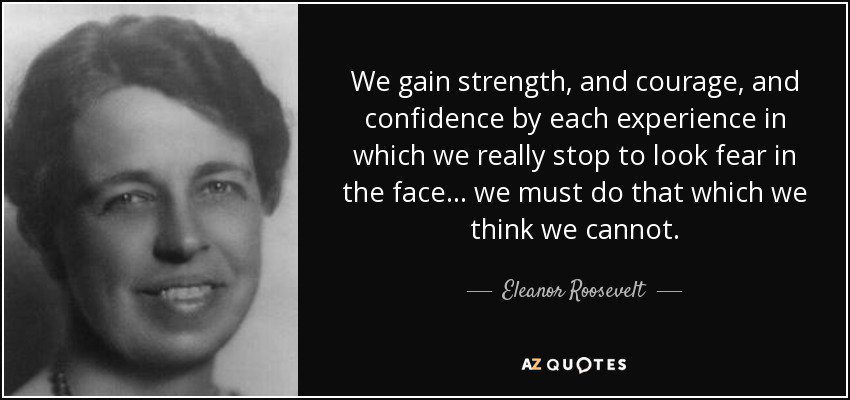
cystugrukaagp7f-jpg-large

— Eleanor Roosevelt

“Act as if what you do makes a difference. It does.”
– William James

“At the end of this day, the world will either be a more or less loving, compassionate, caring place because of your presence.”
– John Pavlovitz

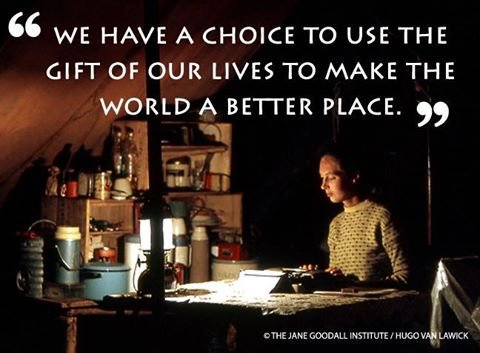
— Jane Goodall

“The individual is capable of both great compassion and great indifference. He has it within his means to nourish the former and outgrow the latter.”
– Norman Cousins

— Amelia Earhart

“You are capable of more than you know. Choose a goal that seems right for you and strive to be the best, however hard the path. Aim high. Behave honorably. Prepare to be alone at times and to endure failure. Persist! The world needs all you can give.”
– Edward O. Wilson

“Common sense is seeing things as they are, and doing things as they ought to be.”
– Harriet Beecher Stowe

“The good you do today may be forgotten tomorrow. Do good anyway. Give the world your best and it may not be enough. Give your best anyway.”
– Mother Teresa

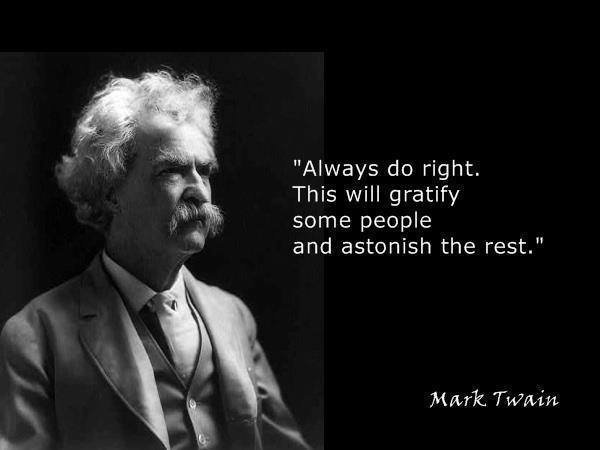
czaajbpviaajcmx

– Mark Twain

“What after all has maintained the human race on this old globe, despite all the calamities of nature and all the tragic failings of mankind, if not the faith in new possibilities and the courage to advocate them.”
– Jane Addams

“There are no passengers on spaceship earth. We are all crew.”
— Marshall McLuhan

“Never doubt that a small group of thoughtful, committed citizens can change the world. Indeed, it is the only thing that ever has.”
– Margaret Mead

“It always seems impossible until it’s done.”
– Nelson Mandela

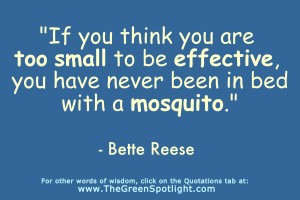
“Nobody made a bigger mistake than he who did nothing because he could do only a little.”
– Edmund Burke

“I am only one, but I am one. I cannot do everything, but I can do something. And I will not let what I cannot do interfere with what I can do.”
– Edward Everett Hale

“If you try, you risk failure. If you don’t, you ensure it.”
– source unknown

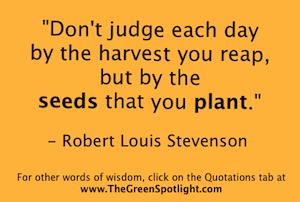
— Robert Louis Stevenson

“It is no measure of health to be well-adjusted to a profoundly sick society.”
– Jiddu Krishnamurti

“For every problem there is a solution that is simple, clean, and wrong.”
– Henry Louis Mencken

“Throughout history, it has been the inaction of those who could have acted, the indifference of those who should have known better, the silence of the voice of justice when it matters most, that has made it possible for evil to triumph.”
– Haile Selassie

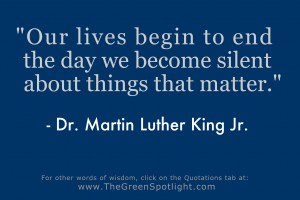
— MLK, Jr.

“If we do not change direction, we are likely to end up where we are headed.”
— Chinese proverb

On Priorities

“Things that matter most must never be at the mercy of things that matter least.”
– Johann Wolfgang von Goethe

– Henry David Thoreau

“Sentiment without action is the ruin of the soul.”
– Edward Abbey

“We spend more time developing means of escaping our troubles than we do solving the troubles we’re trying to escape from.”
– David Lloyd

“Perfection of means and confusion of goals seem, in my opinion, to characterize our age.”
– Albert Einstein

On Effective Approaches

“The world changes according to the way people see it, and if you can alter, even by a millimeter, the way people look at reality, then you can change the world.”
– James Baldwin

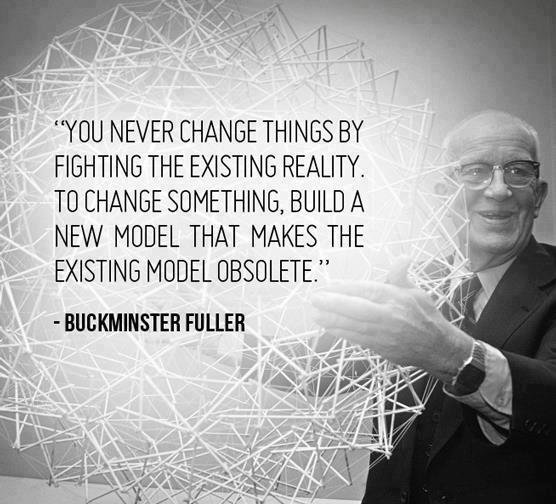
– Buckminster Fuller

“It is better to light a candle than to curse the darkness.”
– Chinese proverb

“Be the change you wish to see in the world.”
– Mahatma Gandhi


Also read this letter by E.B. White:

(Excerpts): “It is quite obvious that the human race has made a queer mess of life on this planet. But as a people we probably harbor seeds of goodness that have lain for a long time waiting to sprout when the conditions are right.”  “As long as there is one upright man, as long as there is one compassionate woman, the contagion may spread and the scene is not desolate.”

…and this letter by Clarissa Pinkola Estes, which begins:

“Do not lose heart. We were made for these times.”


Related posts:

Share

February 28, 2017
[Click here to comment]

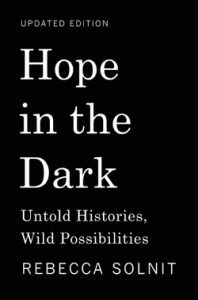
9781608465767-f_medium-2f1e8dbafb4b3334d0db297eed405179Rebecca Solnit’s book, Hope in the Dark: Untold Histories, Wild Possibilities, has become a newly popular source of consolation, illumination, and inspiration, as an increasing number of people are struggling with feelings of hopelessness in these dark times. Originally published in 2004, a new edition was published this year (2016), with a new foreword and afterword by the author. Solnit is active in the climate movement, among other social movements.

Here are a few short excerpts from the book. This is just a taste—just a few morsels of Solnit’s wisdom. I encourage you to pick up a copy of the book to read more.

“Your opponents would love you to believe that it’s hopeless, that you have no power, that there’s no reason to act, that you can’t win. Hope is a gift you don’t have to surrender, a power you don’t have to throw away.”

“Hope locates itself in the premises that we don’t know what will happen and that in the spaciousness of uncertainty is room to act. When you recognize uncertainty, you recognize that you may be able to influence the outcomes—you alone or you in concert with a few dozen or several million others. Hope is an embrace of the unknown and the unknowable, an alternative to the certainty of both optimists and pessimists. …It’s the belief that what we do matters even though how and when it may matter, who and what it may impact, are not things we can know beforehand. We may not, in fact, know them afterward either, but they matter all the same.”

“It’s important to say what hope is not: it is not the belief that everything was, is, or will be fine. The evidence is all around us of tremendous suffering and tremendous destruction. The hope I’m interested in is about broad perspectives with specific possibilities, ones that invite or demand that we act. It’s also not a sunny everything-is-getting-better narrative, though it may be a counter to the everything-is-getting-worse narrative. You could call it an account of complexities and uncertainties, with openings.”

“Authentic hope requires clarity—seeing the troubles in this world—and imagination, seeing what might lie beyond these situations that are perhaps not inevitable and immutable.”

“We cannot eliminate all devastation for all time, but we can reduce it, outlaw it, undermine its sources and foundations; these are victories. A better world, yes; a perfect world, never.”

“…You’d have to be an amnesiac or at least ignorant of history and even current events to fail to see that our country and our world have always been changing, are in the midst of great and terrible changes, and are occasionally changed through the power of popular will and idealistic movements.”

“Much has changed; much needs to change; being able to celebrate or at least recognize milestones and victories and keep working is what the times require of us. Instead, a lot of people seem to be looking for trouble, the trouble that reinforces their dismal worldview. Everything that’s not perfect is failed, disappointing, a betrayal. There’s idealism in there, but also unrealistic expectations, ones that cannot meet with anything but disappointment. Perfectionists often position themselves on the sidelines, from which they point out that nothing is good enough.”

“I have found that…a lot of people respond to almost any achievement, positive development, or outright victory with ‘yes but.’ Naysaying becomes a habit. It [boils] down to: we can’t talk about good things until there are no more bad things.”

“How do we get back to the struggle over the future? I think you have to hope, and hope in this sense is not a prize or a gift, but something you can earn through study, through resisting the ease of despair, and through digging tunnels, cutting windows, opening doors, or finding the people who do these things. They exist.”

“Hope is not a lottery ticket you can sit on the sofa and clutch, feeling lucky. It is an axe you break down doors with in an emergency. Hope should shove you out the door, because it will take everything you have to steer the future away from endless war, from the annihilation of the earth’s treasures and the grinding down of the poor and marginal… To hope is to give yourself to the future — and that commitment to the future is what makes the present inhabitable.”

All this being true, it’s also important to recognize that it’s an entirely normal (and unavoidable) emotional response for humans of conscience and compassion to feel despair sometimes, to temporarily lose hope, and to need a break (from the news, from our own efforts, from people, etc.). We must give ourselves permission to feel what we feel and to take care of ourselves. We can’t be effective activists or helpful to others when we’re broken down. We must all take turns taking breaks when we need them. Remember that the struggle is not on any one person’s shoulders, and you are not alone; others will carry on on the days when you can’t. And when you’ve recharged and regained some active hope, you can carry on for others.

Also see Rebecca Solnit’s July 2016 essay on this theme published in The Guardian, as well as her May 2016 essay in Harper’s magazine, “The Habits of Highly Cynical People.” Solnit is a contributing editor at Harper’s.

You can also follow her daily musings and posts on her Facebook page.


Related posts:

Share

December 30, 2016
1 comment

Several of my posts on this blog have presented a selection of my favorite quotations. Here is an index of those posts, for anyone who enjoys reading good quotations for the wisdom, inspiration, or humor that they convey:

I have also prepared quotations-based posts that have been published on MotherEarthNews.com:

For a more comprehensive compilation of quotations, see our QUOTATIONS page.

Please share your own favorite quotations in the Comments!

Share

August 27, 2014
[Click here to comment]

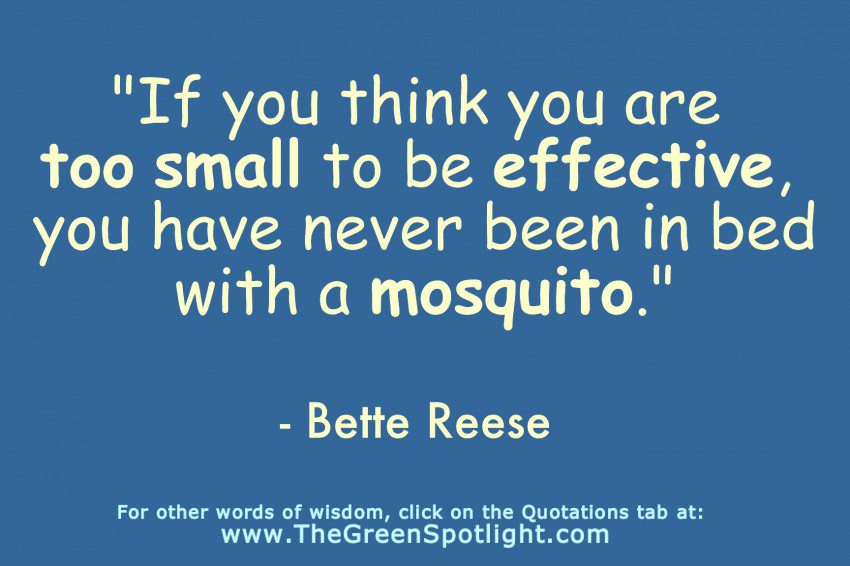
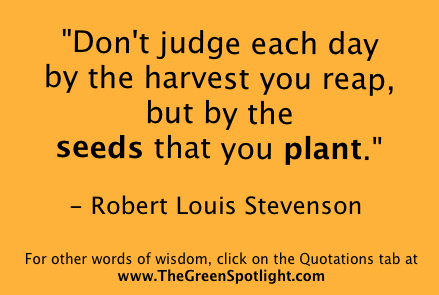
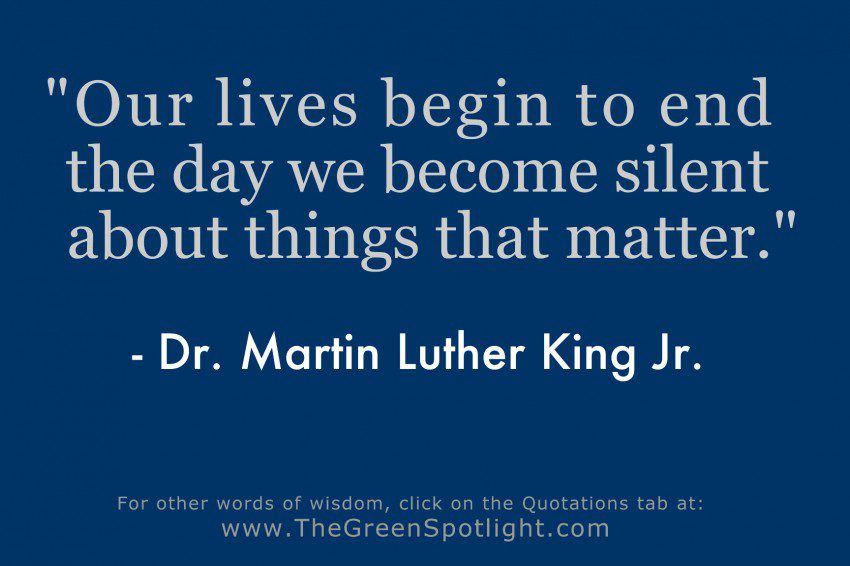
The Green Spotlight has created some simple, colorful graphics of some of our favorite Quotations.  Here’s a batch of four new ones:


Click on each image to see a larger (full-size, e-card) version.

Please feel free to pass them on. You can use the Share icons at the bottom of the post (for direct links to email, Facebook, Twitter, etc.), or just drag a full-size graphic onto your desktop and share it from there.

Click here to see four other quotation graphics, which were posted previously.

Share

June 29, 2012
[Click here to comment]

Please take a look at The Green Spotlight’s Facebook Page to see our daily green blurbs and links. You can view the page even if you don’t have a Facebook account. But if you do have an account, we hope you’ll click on the Like button (if you haven’t already “Liked” the page).

Visit the Page to get a sense of the wide variety of topics that it covers, and feel free to comment on the posts or add your own.

Here’s a sampling of topics that we’ve spotlighted on the page over the last month or so:

  • One Planet Living principles
  • The Great Animal Orchestra, a new book by Bernie Krause
  • 2012 Cleantech Forum
  • Buckminster Fuller Challenge 2012 semi-finalists
  • The Future of Hope, a film about Iceland
  • Waking the Green Tiger, a film about China
  • Urban Roots, a film about Detroit
  • Physicians for Social Responsibility
  • Rural Renewable Energy Alliance
  • Good Jobs, Green Jobs regional conferences
  • Wastewater treatment technology that uses renewable energy
  • Evolve electric motorcycles and scooters
  • Better World Books
  • GMO food labeling
  • The growth of clean energy markets
  • The top B Corp businesses
  • TED talks (e.g. urban farming and enterprise in a school in the Bronx)
  • Quotations from Thomas Edison, Wendell Berry, Barbara Kingsolver, etc.
Share

March 27, 2012
[Click here to comment]

The Green Spotlight has begun creating simple, colorful graphics of some of our favorite Quotations. We hope that you enjoy these and will share your favorites with your friends. More of these graphics will be available in coming weeks; check the Quotations page for new additions.

Click on each image to see a larger (full-size, e-card) version.

Please feel free to pass them on! You can use the Share icons at the bottom of the post (for direct links to email, Facebook, Twitter, etc.), or just drag a full-size graphic onto your desktop and share it from there.


If you have a favorite quotation (whether it’s one that’s already on our Quotations page or not) and you’d like to see it presented in graphic form like these, please mention it in the Comments section below, or send us a note (email: info[at]thegreenspotlight.com). Thanks.

Also see our newer post: Great Quotations II: More Graphics to Share

Share

November 30, 2011
[Click here to comment]