international

The Goldman Environmental Prize is the world’s largest and most prestigious annual award for grassroots environmentalists. Some people refer to it as the “green Nobel.” Goldman Prize winners are models of courage, and their stories are powerful and truly inspiring. “The Prize recognizes individuals for sustained and significant efforts to protect and enhance the natural environment, often at great personal risk. Each winner receives a financial award. The Goldman Prize views ‘grassroots’ leaders as those involved in local efforts, where positive change is created through community or citizen participation in the issues that affect them. Through recognizing these individual leaders, the Prize seeks to inspire other ordinary people to take extraordinary actions to protect the natural world.” Over the 36 years that the Prize has been awarded, there have been 226 recipients of the prize.

This year’s prize recipients (representing each of the six inhabited continental regions of the world) are:
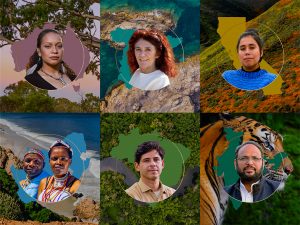
  • Laurene Allen—USA: “When one of the largest environmental crises in New England’s history was exposed in her own community, Laurene Allen stepped up to protect thousands of families affected by contaminated drinking water. Laurene’s campaign pressured the Saint-Gobain Performance Plastics plant—responsible for leaking toxic forever chemicals into community drinking water sources—to announce its closure in August 2023. The plant’s closure in May 2024 marked an end to more than 20 years of rampant air, soil, and water pollution.” (Support/follow: National PFAS Contamination Coalition; Laurene Allen on BlueskyMerrimack Citizens for Clean Water)
  • Mari Luz Canaquiri Murayari—Peru: “In March 2024, Mari Luz Canaquiri Murayari and Asociación de Mujeres Huaynakana Kamatahuara Kana—a Kukama women’s association for which she serves as president—won a landmark rights of nature court decision to protect the Marañón River in Peru. For the first time in the country’s history, a river was granted legal personhood—with the right to be free-flowing and free of contamination. After finding the Peruvian government in violation of the river’s inherent rights, the court ordered the government to take immediate action to prevent future oil spills into the river, mandated the creation of a basin-wide protection plan, and recognized the Kukama as stewards of the river.” (Support/follow: Huaynakana Kamatahuara Kana on Facebook; International RiversInstituo de Defense Legal)
  • Carlos Mallo Molina—Canary Islands: “Carlos Mallo Molina helped lead a sophisticated, global campaign to prevent the construction of Fonsalía Port, a massive recreational boat and ferry terminal that threatened a biodiverse 170,000-acre marine protected area in the Canary Islands. Proposed to be built on the island of Tenerife, the port would have destroyed vital habitat for endangered sea turtles, whales, and sharks. In October 2021, because of the campaign, the Canary Islands government officially canceled the port project. In lieu of the port, Carlos is now realizing his vision for a world-class marine conservation and education center—the first of its kind in the Canary Islands.” (Support/follow: Innoceana; Carlos Mallo Molina on LinkedIn)
  • Semia Gharbi—Tunisia: “Semia Gharbi helped spearhead a campaign that challenged a corrupt waste trafficking scheme between Italy and Tunisia, resulting in the return of 6,000 tons of illegally exported household waste back to Italy, its country of origin, in February 2022. More than 40 corrupt government officials and others involved in waste trafficking in both countries were arrested in the scandal. Her efforts spurred policy shifts within the EU, which has now tightened its procedures and regulations for waste shipments abroad.” (Support/follow: Association for Environmental Education for Future Generations; International Pollutants Elimination Network (IPEN); GAIA)
  • Besjana Guri and Olsi Nika—Albania: “Besjana Guri and Olsi Nika’s campaign to protect the Vjosa River from a hydropower dam development boom resulted in its historic designation as the Vjosa Wild River National Park by the Albanian government in March 2023. This precedent-setting action safeguards not only the entirety of the Vjosa’s 167 miles—which flow freely across Albania—but also its free-flowing tributaries, totaling 250 miles of undisturbed river corridors. The Vjosa ecosystem is a significant bastion of freshwater biodiversity that provides critical habitat for several endangered species. The new national park is both Albania and Europe’s first to protect a wild river.” (Support/follow: EcoAlbania and their YouTube channel)
  • Batmunkh Luvsandash—Mongolia: “Determined to protect his homeland from mining, Batmunkh Luvsandash’s activism resulted in the creation of a 66,000-acre protected area in Dornogovi province in April 2022, abutting tens of thousands of acres already protected by Batmunkh and allies. Home to Argali sheep, 75% of the world’s population of endangered Asiatic wild ass, and a wide variety of endemic plants, the protected area forms an important bulwark against Mongolia’s mining boom.” (Support/follow: The Nature Conservancy’s work in Mongolia)

Click on each recipient’s name to read a longer profile—or watch a brief video—about their remarkable efforts and achievements.

Posts on Goldman Prize winners from previous years:

Share

April 21, 2025
[Click here to comment]

Listed below are some of The Green Spotlight posts that include information related to sustainable land use (urban, suburban, rural, and wilderness), e.g., land/habitat conservation and stewardship, sustainable agriculture and permaculture, regenerative and restorative land use and re-wilding, sustainable home/homestead and neighborhood planning and development, and resilience. Links to organizations and resources on these topics are also provided, at the bottom of this post.

img_2526


Organizations and Resources:

Share

February 28, 2025
[Click here to comment]

True peace is not merely the absence of war; it is the presence of justice.
— Jane Addams  (and Dr. MLK Jr. said something very similar)

“Blessed are the peacemakers.”
— Sermon on the Mount

This listing of organizations includes groups that focus on: human rights, nonviolence, nonviolent social action, violence prevention (including gun violence), peace and justice, peacebuilding, preventing or stopping war and genocide, restorative justice, conflict resolution, nuclear safety (weapons of mass destruction, disarmament), and peace and human rights in the Middle East/Israel/Palestine. This is not a comprehensive list of organizations; if you know of other groups that you would recommend to others, please mention them in the Comments.

My hope is that more of these organizations will work together and collaborate, to broaden their reach and amplify their impact, nationally and globally.

Human Rights Groups

Nonviolence Groups
(Nonviolent Action and Violence Prevention)

Gun violence prevention:

Peace Groupsflying dove

Nuclear Safety & Anti-Nuclear Groups

Israel/Palestine, Middle East Peace & Human Rights Groups


A couple of peacebuilders I recommend following online: Bernice King and Ami Dar.

I’ll add more people and organizations to this list over time. I also plan to provide a list of groups that address extremism and political violence, but that could be a separate post.

Lastly, click the following link for some quotations on peace and power.

True peace requires awareness, restraint, strength, and effort. May we all become peacemakers and peacebuilders, starting in our own lives and relationships and expanding that skill out into our communities and world.

Share

January 23, 2025
1 comment

“I am only one, but I am one. I cannot do everything, but I can do something. And I will not let what I cannot do interfere with what I can do.”
– Edward Everett Hale

“Do not be daunted by the enormity of the world’s grief. Do justly, now. Love mercy, now. Walk humbly, now. You are not obligated to complete the work, but neither are you free to abandon it.”
– The Talmud

We are facing a sociopolitical-environmental-economic-technological polycrisis. As time goes on and it becomes more difficult to ignore, more people will see and understand the tangled ball of troubles and threats that are being aimed at many of us within the U.S, as well as many others across the world, and our shared air, water, lands, ecosystems, and climate. And as the awareness and the alarm grows, more people will try to figure out what they can do to reduce some of the harms.

None of us gets to choose the era we live through or to control a whole lot about the world we live in. But we should strive to rise to the challenge of the situation we are confronted with and meet the moment, by doing what we can to make our communities, our country, and our world as livable (and worth living in) as we can. We can strive to be among the many flickering lights that will guide a way through the darkness.

I offer you my wishes of strength, courage, endurance, solace, serenity, and solidarity. And I humbly offer up some specific, practicable ways to cultivate those skills and conditions, presented below in the following sections:

  • Self-Care
  • Community Care
  • City/County/State Actions
  • Personal Actions
  • Organizations and Resources

Note: I have written this from the United States, with the United States in mind, but much of what I’ve included can be applied to other areas of the world or any community facing crises.

I will update and add more suggestions to this guide over time.


Self-Care

We can only help others well when we are feeling fairly strong and stable ourselves. So we need to take care of ourselves—our physical, mental, and emotional health and wellbeing—and recognize that there are times when we need a break from taking in more terrible news or taking care of others or trying to “fix” the world. Our brains and our hearts are not equipped to take in bad news from all over the country and around the world, all day every day. We cannot process all of that information, and we can’t expect ourselves to carry the weight of the world. We can take turns in our efforts; and we should accept and ask for help or support when we need it. We all have our own ways of coping, self-soothing, and caring for ourselves. But we should strive to make our healthier coping mechanisms into habits, so we don’t succumb to the unhealthy ones very often. Here are a few general tips and reminders:

  1. Set aside periods of time (ideally at least one day a week, or a portion of every day) for a “media fast,” when you will not look at media, social media, or emails or expose yourself to the day’s horrors. Try to stay grounded in the Here and Now (the present) whenever you can, rather than letting yourself become overwhelmed by the There and Everywhere and Everyone and the Future, Forever. Build some time into each day when you and your brain can rest and recover.
  2. Get enough sleep, every night that you can. We can’t function properly, think straight, or stay healthy without enough deep sleep.
  3. Eat nutritious and nourishing foods that will give you energy and help keep your immune system strong.  (And if possible, take a third-party-vetted multivitamin, or at least Vitamin D/K, especially in winter months.)
  4. Get some exercise almost every day, even if it’s just some stretching or a short walk around the block or 5 minutes of yoga (or tending to a garden).
  5. Stay connected with good friends. Regularly reach out and make time for friends and supportive family.
  6. Try deep/slow breathing exercises that are proven to help us relax (like cyclic sighing or “bee breath“ or humming or singing), meditation, or other relaxation or mindfulness techniques. Or listen to music or do something creative.
  7. Try to get out into natural settings (e.g., parks, forests, waterbody areas, vista points) and spend time with animals. Both of those things can help you regain some perspective.
  8. Make time for some humor and comedy, amidst tragedy.
  9. Remind yourself to notice and seek out and appreciate beautiful things (large and small), funny things, good moments, good news, good people (helpers), glimmers of compassion or beauty or joy, to counter the ugliness. Share some of these good things with other people (through conversations, posts, photos).
  10. If you regularly struggle with overwhelm or grief, despite your best efforts to practice healthy habits like those above, you might want to check out the Good Grief Network’s workshops and resources, or Pema Chodron’s books, or look for (or establish) a Support Group, or find a good therapist. (If the climate crisis is one of the primary drivers of your grief or anxiety, you might be interested in checking out the Climate Psychology Alliance of North America’s Climate-Aware Therapists Directory.) A few people/pages to follow online for wisdom and inspiration include: Cole Arthur Riley, Anne Lamott, Brene Brown, Rebecca Solnit, Ami Dar, Hell and Earth, and Humanity & Peace.


We may not be able to stop most or even many of the awful things that are happening or that will happen (and there’s only so much we can do all by ourselves, as individuals). But we can focus on harm reduction strategies, and we can find ways of building our power by working together. While we can try to influence (or delay) what happens at the federal level, for the time being—in the United States, in particular—more victories and successes will probably be achieved at the local/community/city/county and state levels (and we can also press for positive policies at the international level, and in other countries), so focus most of your energy on those efforts. Even if we cannot make the world or our immediate future good, we can do our best to make it less bad, and limit unnecessary suffering as much as possible. Small steps and successes are important and should be celebrated. Even if each of us can only help a few beings and make their lives easier—or save even one being (or wild place)—those efforts will be worthwhile.

Working with other people is rarely easy, but it’s necessary and can be rewarding and effective. We’ll have to summon up as much patience and kindness as we can, and resist falling into permanent despair or fatalism—or the urge to shut down, become cold and unfeeling, or to isolate ourselves from others—as those may feel like the easier paths. We’ll never agree with or relate to everyone else or their tactics or their way of dealing with things. But we have to continuously try to accept our forgivable differences, to not let our egos or pride get in the way of our efforts, and to not turn on (or away from) each other.

We should strive to be of service, and to give what we can. I try to regularly remind myself of this statement by Robin Wall Kimmerer (from her book, Braiding Sweetgrass): “Wealth among traditional people is measured by having enough to give away.” In addition to monetary and material wealth, we should also consider our levels of energy, hope, strength, and resilience as other types of wealth that we should strive to have enough of that we can offer them—”give them away”—to others.

There are many ways—big and small—to make a tangible difference. If you’re looking for suggestions, I offer these:

Community Care

  1. Get to know your neighbors, and check in on them or offer to help out if they need anything (especially any neighbors who are disabled, elderly, alone, or vulnerable). Consider inviting a few neighbors over to your house for a gathering. Also periodically reach out to friends, and find out how they’re doing and what they might need.
  2. Find and support local groups that help the most vulnerable (e.g., immigrants/refugees, unhoused people, the disabled or elderly, low-income or unemployed people, abused or neglected or foster children, domestic violence survivors, trans and gay people, prisoners and detainees, people with severe mental illness, and animals). For example, you could support local shelters, housing groups, food banks/pantries, and Community Action Agencies. Also search for (or consider starting) a local Mutual Aid group or Rapid Response Network or CERT (Community Emergency Response Team) group. Choose at least one local group to get involved with, through volunteering or donations. (Or choose different groups to support each month or year.)
  3. Support (and use) your library, as well as local arts organizations or venues, and community gardens.
  4. Patronize/support small, local businesses, worker-owned businesses/cooperatives (coops), local farms/farmers and farmer’s markets.
  5. Volunteer at or support the local, state, and national parks in your region.
  6. Find (or start) a local climate action group, even if it’s just with a few friends, neighbors, or co-workers.
  7. Donate needed/requested items to a local group for the unhoused or the poor. Items that are often needed include clothing (e.g., coats, underwear, warm and durable socks, gloves, hats, scarves, rain/snow pants, other layers, shoes/boots); tents, sleeping bags, blankets and emergency blankets, tarps, roller bags and rolling carts, and hygiene items. You could also give money, food, or other items directly to unhoused people.
  8. Put some food items in a Little Free Library box (if there’s room). Or build a Free Food Pantry box in your front yard, or suggest that local churches or grocery stores do this.
  9. Propose that your local Democratic Party office (or a specific candidate’s campaign office) be used regularly as a space for local community organizing and mutual aid initiatives that help meet people’s needs (e.g., food donations and distribution, housing assistance, etc.).

City/County/State Actions

  1. Tell your state representatives to pass stronger affordable housing regulations, and tell your city and/or county leaders (mayor, city council, county commissioners, officials, developers, and land owners) to build more affordable housing for low-income people, as well as tiny home communities or apartments and/or RV parking areas (with support services) for unhoused people, and more shelters (that are also set up to accept people who have pets).
  2. Tell your city, county, and state officials that you do not support the mass deportation or detention of immigrants (particularly those who have no record of violent crime), and you want them to protect and support immigrants in your community in any ways that they can, and require that any “law enforcement” officers wear name badges and do not wear identity-concealing full-face masks.
  3. Support groups that focus on state and local races/elections (e.g., DLCC, The States Project, Sister DistrictOathand your state and local Democratic Party). There are important state and local elections (including “special elections” to fill vacant seats) every year. State Supreme Court/judicial races, as well as State Attorney General, Secretary of State, and local school board races are especially important, but they are often neglected by funders and voters.
  4. Tell your state representatives and Governor to immediately develop and pass Healthcare for All/Universal Healthcare legislation for your state (so far, Oregon’s Healthcare for All plan is the furthest along in the process), and to develop state-based programs that could help shore up residents’ Medicaid and Social Security (retirement and disability) benefits if federal benefits are cut back. Also demand that they pass anti-poverty laws and initiatives, including a much higher minimum wage (a Living Wage)paid sick days, and paid medical/parental/caregiver leave requirements for everyone employed in your state.
  5. Tell your state and local representatives to bolster and fund state and local disaster response and relief initiatives, to make up for the shortfall of support from the federal government.
  6. Tell your state representatives to protect and conserve your state-owned public lands, and not to allow them to be used/exploited or leased for resource extraction and private profit (logging, mining, grazing, or development). Tell them to designate more land and river/waterbody areas for wilderness/wildlife conservation and state parks.
  7. Tell your state representatives to pass legislation that will protect doctors, midwives, nurses, patients, and anyone who assists or communicates with people who are seeking reproductive health care, miscarriage care, medication or surgical abrtion, or contraception (including emergency contraception) from federal or out-of-state prosecution. Life-saving medical interventions for pregnant women must always be protected and allowed and never delayed by legal or governmental obstacles.
  8. Ask your city, county, or state leaders and policymakers to start a Universal Basic Income (UBI) program. These programs have proven very successful.

Personal Actions

  1. Try to set aside more savings for your retirement and emergency/medical expenses, as ACA health insurance, Medicaid, Medicare, and possibly even Social Security benefits could be cut back by the new regime (to pay for their massive tax cuts for the wealthy).
  2. If you know someone who has student loans they are struggling to pay down or pay off and you are financially comfortable, you could offer to help them with their payments. Or you could send money to debt relief groups such as the Debt Collective, Undue Medical Debt, and Dollar For.
  3. If you have a bank account with one of the large, national banks (especially Wells Fargo, Chase, Citi, or Bank of America), one of the best things you can do is to move your money to a local credit union (or a green bank, or a customer-recommended community bank that doesn’t gouge its own members). And if you have any stock-based investment accounts (401Ks, mutual funds, etc.), make sure they aren’t funding evil companies and switch them to socially/environmentally responsible investment accounts.
  4. To stop feeding the beast, opt out of buying things from (i.e., giving your money to) predatory, greedy, exploitative corporations (e.g., Amazon, Walmart, Home Depot, Uline, and most other large, multinational companies) whenever possible. Instead, try to support small, local businesses, and B Corps-certified or benefit corporations or worker-owned businesses/coops that are socially and environmentally responsible and good to their employees.
  5. Start growing some of your own food (note: using “cold frames” can help you extend your growing season), and if you grow more than your family can eat, share the bounty. Also buy food from local (preferably organic) farm stands, farmer’s markets, and CSA (community supported agriculture) programs.
  6. Support and help fund community solar projects, and tell your state and local representatives and your utilities to build more solar/wind projects and renewable microgrids with fire-safe battery storage for energy security. If your utility offers a renewable energy program, sign up for it.
  7. Subscribe to and share information from media outlets that consistently produce solid, independent, fact-based journalism (e.g., ProPublica, Courier Newsroom, States NewsroomThe Guardian, MongabayMother Jones, The Tennessee Holler, Press Forward, Scientific American, local newspapers and public radio stations, NPR, PBS, and for a longer list of suggestions, click here.)
  8. In addition to local and state and national groups, identify at least one international organization (or an organization based in another country) to donate to. The next section (Organizations and Resources) lists a number of groups to check out. (To see lists of some non-profit organizations, by topic, click here.) Also consider doing more direct giving to people in need, in person or through sites like GiveDirectlyKiva, and GoFundMe. And consider supporting a disaster relief organization, such as Direct Relief, CORE, Global Giving, International Federation of Red Cross and Red Crescent Societies, your regional Red Cross, Mutual Aid Disaster Relief, Team Rubicon, IFAW, or The Climate Mobilization.
  9. If you are financially secure, consider using some of your money to donate to Land Trusts (local/regionalor international) or re-wilding organizations, or purchase a forest or wildland property (or other undeveloped, non-urban land parcel)—to protect it from development, logging, mining, industrial/Big Ag, or other destructive uses; or purchase disturbed land to remediate it and either re-wild it or create affordable housing on it; or purchase industrial farmland and convert it to organic farming. You can work with a regional Land Trust or conservation group to make sure the land will be permanently protected beyond your lifetime.
  10. If you don’t want to have kids, or you don’t want to have more kids than you currently have, you (if you’re a woman) could get a tubal ligation (or men can get a vasectomy, which is reversible)—or a birth control implant or an IUD (which work for many years)—so you won’t be at risk of getting pregnant or at risk of dying due to life-threatening pregnancy complications or a partial miscarriage that might not receive prompt or proper medical treatment. You could also donate to clinics that provide vasectomies and tubal ligation and contraceptives, so they can provide these services to people who cannot afford them. And you could buy contraception (e.g., the over-the-counter O-pill, condoms, or packages of emergency contraception) for anyone who might need them now or in the future. Some states have signaled that they are likely to try to curtail or ban contraception.
  11. Implement online/digital privacy and security recommendations, including these and others published by the Electronic Frontier Foundation (EFF) or by WIRED. Use the Signal app for private/secure texting (and you can set your messages to disappear after a specified amount of time). Also check out services (e.g. DeleteMe) that get data broker websites to remove your personal information that they’ve posted online, and consider getting identity theft insurance and other security/privacy protections from a service (e.g., Aura). It’s a pain to try to stay on top of online security protocols, but there are so many scammers and hackers out there (as well as surveillance), and our federal government is destroying its consumer protection and cybersecurity apparatus (e.g. the CFPB and CISA), so we’re largely on our own in trying to protect ourselves from spying, scams, fraud, and hacks.

Feel free to add your own suggestions of specific and effective ways that we can face the challenges of our time, reduce harms, and help turn things around.


Organizations and Resources

Also see: Non-Profit Organizations to Know (organized by topic)


Other Relevant Posts:

Share

December 10, 2024
2 comments

This listing includes a wide variety of groups that focus on women’s issues. Most of the organizations that are listed here are based in the U.S. and have a U.S. focus, but some international groups are included, as well. We are not familiar with every group listed below, so inclusion in the listing does not constitute an endorsement.

We‘ve organized the groups into the following categories:

  • Environmental
  • General
  • Political action / representation
  • Health / reproductive health
  • Legal
  • Safety
  • BIPOC
  • Military / veterans
  • International
  • Media and films

A few organizations have been listed in more than one of these categories.

ENVIRONMENTAL

GENERAL (women’s rights, equality, empowerment, advocacy)

POLITICAL ACTION / REPRESENTATION

HEALTH / REPRODUCTIVE HEALTH

LEGAL

SAFETY (from violence / assault)

BIPOC women (Black, Indigenous, and People of Color)

WOMEN IN THE MILITARY / VETERANS 

INTERNATIONAL

MEDIA

Films  (this is just a small selection; we’ll add more to this list over time):


If there are other groups or websites that you think should be added to this listing, please mention them in the Comments.

Related posts:


#womenslivesmatter #womenarepeople #WomensRightsAreHumanRights #personhood #liberty

Share

July 31, 2024
2 comments

The Goldman Environmental Prize is the world’s largest and most prestigious annual award for grassroots environmentalists. Many people refer to it as the “green Nobel.” Goldman Prize winners are models of courage, and their stories are powerful and truly inspiring. “The Prize recognizes individuals for sustained and significant efforts to protect and enhance the natural environment, often at great personal risk. Each winner receives a financial award. The Goldman Prize views ‘grassroots’ leaders as those involved in local efforts, where positive change is created through community or citizen participation in the issues that affect them. Through recognizing these individual leaders, the Prize seeks to inspire other ordinary people to take extraordinary actions to protect the natural world.” Over the 35 years that the Prize has been awarded, there have been more than 220 recipients of the prize.

This year’s prize recipients (representing each of the six inhabited continental regions of the world) are:

  • Andrea Vidaurre—USA: “Andrea Vidaurre’s grassroots leadership persuaded the California Air Resources Board to adopt, in the spring of 2023, two historic transportation regulations that significantly limit trucking and rail emissions. The new regulations—the In-Use Locomotive Rule and the California Advanced Clean Fleets Rule—include the nation’s first emission rule for trains and a path to 100% zero emissions for freight truck sales by 2036. The groundbreaking regulations—a product of Andrea’s policy work and community organizing—will substantially improve air quality for millions of Californians while accelerating the country’s transition to zero-emission vehicles.” (Support/follow: The People’s Collective for Environmental Justice, and Moving Forward Network)
  • Marcel Gomes—Brazil: “Marcel Gomes coordinated a complex, international campaign that directly linked beef from JBS, the world’s largest meatpacking company, to illegal deforestation in Brazil’s most threatened ecosystems. Armed with detailed evidence from his breakthrough investigative report, Marcel and Repórter Brasil worked with partners to pressure global retailers to stop selling the illegally sourced meat, leading six major European supermarket chains in Belgium, France, the Netherlands, and the United Kingdom to indefinitely halt the sale of JBS products in December 2021.” (Support/follow: Mighty Earth, AidEnvironment, Environmental Investigation Agency, and Repórter Brazil; and please sign this petition.)
  • Teresa Vicente—Spain: “Teresa Vicente led a historic, grassroots campaign to save the Mar Menor ecosystem—Europe’s largest saltwater lagoon—from collapse, resulting in the passage of a new law in September 2022 granting the lagoon unique legal rights. Considered to be the most important saltwater coastal lagoon in the western Mediterranean, the once pristine waters of the Mar Menor had become polluted due to mining, rampant development of urban and tourist infrastructure, and, in recent years, intensive agriculture and livestock farming.”
  • Alok Shukla—India: “Alok Shukla led a successful community campaign that saved 445,000 acres of biodiversity-rich forests from 21 planned coal mines in the central Indian state of Chhattisgarh. In July 2022, the government canceled the 21 proposed coal mines in Hasdeo Aranya, whose pristine forests—popularly known as the lungs of Chhattisgarh—are one of the largest intact forest areas in India.” (On Twitter, follow @SHasdeo and @CBARaipur)
  • Murrawah Maroochy Johnson—Australia: “Murrawah Maroochy Johnson blocked development of the Waratah coal mine, which would have accelerated climate change in Queensland, destroyed the nearly 20,000-acre Bimblebox Nature Refuge, added 1.58 billion tons of CO2 to the atmosphere over its lifetime, and threatened Indigenous rights and culture. Murrawah’s case, which overcame a 2023 appeal, set a precedent that enables other First Nations people to challenge coal projects by linking climate change to human and Indigenous rights.” (Support/follow: Youth Verdict)

Click on each recipient’s name to read a longer profile—or watch a brief video—about their remarkable efforts and achievements.

Posts on Goldman Prize winners from previous years:

Share

April 29, 2024
[Click here to comment]

The climate movement has been growing much larger and building power in recent years. The vast majority of people in the U.S. and in the world are concerned about the climate and want to see more climate action. And there’s no shortage of climate-focused organizations. But we do need more people who’ve been sitting on the sidelines to join the existing efforts and turn their climate concern into action, so we can reach a critical mass. There is strength in numbers and in collective action.

strength in numbers

You don’t have to identify as an “activist” to amplify, support, or participate in the work of climate organizations, and you don’t need to wait for an invitation to join or to get involved—but if you’d like one, consider this your cordial, official invitation! All of us in the climate movement welcome you!

If you aren’t already familiar with a bunch of climate organizations, check out the list below. I recommend following at least a few of these climate organizations online (e.g., on social media) to get to know what they’re about and to get a sense of which ones have an approach or a tone that resonates with you the most. Then sign up to join—or get on the mailing list of—one or more of them. And start sharing their posts and actions with others in your social network.

This list of climate organizations is fairly comprehensive but it is not exhaustive. Most of the following groups are based in the U.S. and have a national or international scope, and most are non-profits. Some of these groups have regional or local chapters. (As I learn about other national/international groups over time, I will be adding more to this list.) Many other climate organizations exist, including local, grassroots groups and projects, all over the world. If you can’t find a local group, chapter, or committee in your town, you could start an informal climate group or project in your community, neighborhood, workplace, school, or religious congregation.

Note: In this first list, below, the organizations that are in bold type are the groups that I am most familiar with and feel most comfortable recommending, but all of these organizations have an important role to play. Are you familiar with some of these?

These are organizations for people in particular professions or demographics:

There are also a number of faith-based (religious) climate groups.

Also, many broad-based environmental organizations include climate issues among the spectrum of environmental issues they work on. After all, climate change affects and is affected by every other environmental (and social) issue.

And many other types of environmental organizations with a specific focus (e.g., environmental justice, youth/young people, health, land/forest conservation, animal/species protection, etc.) often also recognize and address climate impacts in their work.

If you would like assistance with identifying a few organizations that are the best fit for your particular interests or your preferred organizational strategies/approaches (e.g., legal, legislative/lobbying, direct action, education/awareness building, etc.), I’m a climate advisor and I can assist you with that.

If you would like to recommend a climate organization that isn’t on this list, please mention it in the Comments!


Climate Resources

The following are information sources—including some media/news sites—that provide science-based, fact-based information on the climate crisis and climate solutions. Most of these are based in the U.S.  These sites can help you get more informed or help you educate others about climate issues:

For other environmental and general news sources, see our post on Reputable and Fact-Based News and Information Sources.

For other types of climate resources, also see our post on Books, Films and TV, and TED Talks.

Other relevant posts:

Share

February 27, 2024
[Click here to comment]

The Goldman Environmental Prize is the world’s largest and most prestigious annual award for grassroots environmentalists. Many people refer to it as the “green Nobel.” Goldman Prize winners are models of courage, and their stories are powerful and truly inspiring. “The Prize recognizes individuals for sustained and significant efforts to protect and enhance the natural environment, often at great personal risk. Each winner receives a financial award. The Goldman Prize views ‘grassroots’ leaders as those involved in local efforts, where positive change is created through community or citizen participation in the issues that affect them. Through recognizing these individual leaders, the Prize seeks to inspire other ordinary people to take extraordinary actions to protect the natural world.” Over the 34 years that the Prize has been awarded, there have been more than 215 recipients of the prize.

This year’s prize recipients (representing each of the six inhabited continental regions of the world) are:

  • Diane Wilson—Texas, USA: “In December 2019, Diane Wilson won a landmark case against Formosa Plastics, one of the world’s largest petrochemical companies, for the illegal dumping of toxic plastic waste on Texas’ Gulf Coast. The $50 million settlement is the largest award in a citizen suit against an industrial polluter in the history of the US Clean Water Act. As a part of the settlement, Formosa Plastics agreed to reach ‘zero-discharge’ of plastic waste from its Point Comfort factory, pay penalties until discharges cease, and fund remediation of affected local wetlands, beaches, and waterways.” (Support/follow: San Antonio Bay Waterkeeper)
  • Alessandra Korap Munduruku—Brazil: “Alessandra Korap Munduruku organized community efforts to stop mining development by British mining company Anglo American in Brazil’s Amazon rainforest. In May 2021, the company formally committed to withdraw 27 approved research applications to mine inside Indigenous territories, including the Sawré Muybu Indigenous Territory, which contains more than 400,000 acres of rainforest. The decision protects a critically threatened area of the Amazon—the world’s largest rainforest and a globally significant carbon sink—from further mining and deforestation.” (Support/follow: Associação Indígena PARIRIAPIB, Amazon WatchCOIAB, and sign this letter.)
  • Tero Mustonen—Finland: “Since April 2018, Tero Mustonen led the restoration of 62 severely degraded former industrial peat mining and forestry sites throughout Finland—totaling 86,000 acres—and transformed them into productive, biodiverse wetlands and habitats. Rich in organic matter, peatlands are highly effective carbon sinks; according to the IUCN, peatlands are the largest natural carbon stores on Earth. Roughly one-third of Finland’s surface area is made up of peatlands.” (Support/follow: Snowchange Cooperative and Global Peatlands Initiative)
  • Delima Silalahi—Indonesia: “Delima Silalahi led a campaign to secure legal stewardship of 17,824 acres of tropical forest land for six Indigenous communities in North Sumatra. Her community’s activism reclaimed this territory from a pulp and paper company that had partially converted it into a monoculture, non-native, industrial eucalyptus plantation. The six communities have begun restoring the forests, creating valuable carbon sinks of biodiverse Indonesian tropical forest.” (More here; and support/follow the Rainforest Action Network (RAN).)
  • Chilekwa Mumba—Zambia: “Alarmed by the pollution produced by the Konkola Copper Mines operation in the Copperbelt Province of Zambia, Chilekwa Mumba organized a lawsuit to hold the mine’s parent company, Vedanta Resources, responsible. Chilekwa’s victory in the UK Supreme Court set a legal precedent—it was the first time an English court ruled that a British company could be held liable for the environmental damage caused by subsidiary-run operations in another country. This precedent has since been applied to hold Shell Global—one of the world’s 10 largest corporations by revenue—liable for its pollution in Nigeria.” (See Conservation Lower Zambezi and sign their petition.)
  • Zafer Kizilkaya—Turkey: “In collaboration with local fishing cooperatives and Turkish authorities, Zafer Kizilkaya expanded Turkey’s network of marine protected areas (MPAs) along 310 miles of the Mediterranean coast. The newly designated areas were approved by the Turkish government in August 2020 and include an expansion of the MPA network by 135 square miles (350 sq. km) of no trawling/no purse seine, and an additional 27 square miles (70 sq. km) of no fishing zones. Turkey’s marine ecosystem has been severely degraded by overfishing, illegal fishing, tourism development, and the effects of climate change—and these protected areas help mitigate these challenges.” (Support/follow: Mediterranean Conservation Society)

Click on each recipient’s name to read a longer profile—or watch a brief video—about their remarkable efforts and achievements, and to find links to their social media pages.

Here’s the video about Diane Wilson:


Posts on Goldman Prize winners from previous years:

Share

April 24, 2023
[Click here to comment]

This is a listing of some legal organizations that I recommend following, learning more about, and potentially supporting. They all use the law to try to serve and support the common good in various ways: to protect humans and human rights, civil rights, and civil liberties; to protect animals and the rights of non-human species; and/or to protect nature, our shared environment, and the livability of our planet.

Many human/societal/commercial/industrial activities and practices that are considered “business as usual” are not only unjust, but are truly ecocidal, genocidal, and collectively suicidal, and really ought to be legally deemed (and prosecuted as) Crimes Against Humanity and the planet. Currently, only some of these existential wrongs can be addressed and enforced through legal avenues. While the law has typically focused on the rights of humans (and human entities, such as companies or organizations), efforts have been ramping up to also establish/enact and secure the Rights of Nature (including rivers, etc.) as well as Non-Human Rights for other species.

In recent years, some countries have amended their constitutions, enacted laws, or issued court decisions recognizing the legal rights of nature. Those countries include: Ecuador, New Zealand, Bolivia, Panama, Mexico, Colombia, Brazil, and Bangladesh. And recently, the UN formally declared that access to a clean, healthy, and sustainable environment is a universal human right. However, this is a non-binding resolution; the hope is that it will help spur countries to improve their environmental laws and the implementation and enforcement of those laws.

Environmental law/rights

Animal rights

Also see: our Twitter list on Animal rights and protection; and our related post: Animal Protection, Rescue, and Advocacy Organizations

Human/civil/constitutional rights
(including voting rights, bodily autonomy, reproductive rights, etc.)


Related posts:

Organizations for Human Rights, Peace, and Nonviolence

Posts related to Democracy, Elections, Voting, and Social Change

Share

August 2, 2022
[Click here to comment]